
What Is Local SEO, GEO and Why Your WordPress Site Needs Local Schema — Introducing CM GEO Core
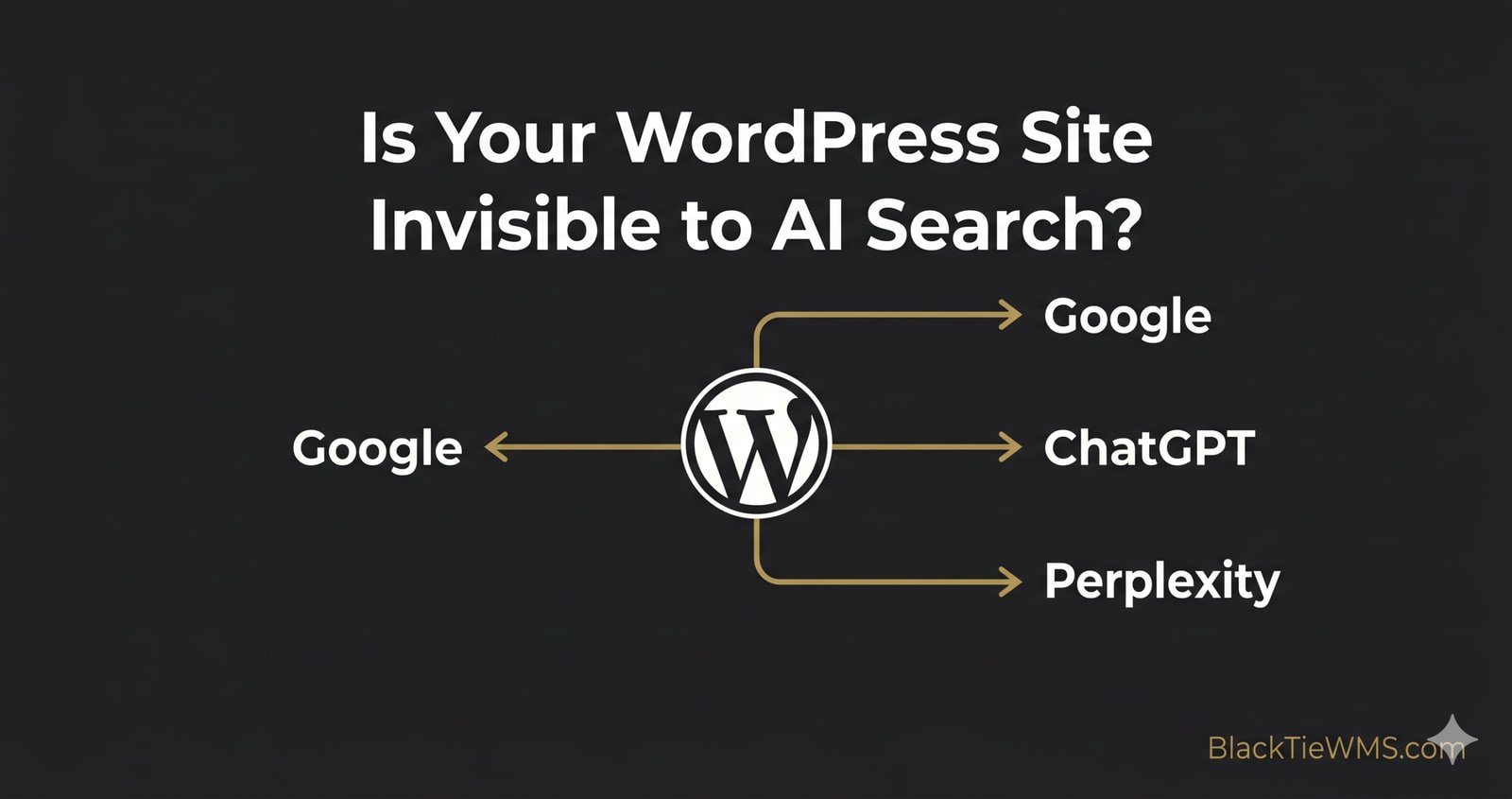
“If Google cannot understand your business structure, it cannot recommend your business.”
The bridge between your WordPress site and these AI engines is something called Local Schema Markup — specifically, structured JSON-LD data embedded in your pages that tells search engines exactly who you are, where you are, what you do, and who you serve.
In this post, I will explain what GEO is, why local schema matters for small business websites, and how I built a free WordPress plugin — CM GEO Core — to solve this problem cleanly and permanently.
No agency pitch. No fluff. Just what works — and why.
Why Standard SEO Is Not Enough for Local Businesses
Most small business owners approach SEO the same way: install a plugin, write a title tag, add a meta description, chase a score. And for general content — blog posts, product pages, informational articles — that approach works reasonably well.
But local businesses have a different challenge. You are not just competing for a keyword. You are competing for a location + intent combination — and that requires a different kind of signal entirely.
When someone searches “photo album maker near me” or “WordPress consultant in Texas,” Google does not just scan your page text. It looks for structured data — machine-readable information embedded in your site that confirms: yes, this business is real, it is located here, it serves these customers, and it answers these questions.
Without that structured data, your site is invisible to half the signals Google uses to rank local results. Worse — AI-powered search tools like ChatGPT, Perplexity, and Google AI Overviews rely almost entirely on structured data to decide which local businesses to surface in their answers. If your schema is missing, you simply do not exist in that world.
This is the gap that most WordPress SEO plugins do not fill. They optimize your text. They do not structure your identity.
That gap is exactly what GEO — Generative Engine Optimization — is designed to close.
What Local Schema Markup Actually Does
Schema markup is structured data — a standardized vocabulary that you embed in your website’s code to tell search engines exactly what your content means, not just what it says.
Think of it this way. Your page text says: “We make beautiful custom photo albums for families and weddings in Texas.” That is readable by humans. But Google’s structured data layer asks a different question: Is this a business? Where is it located? What category is it? What does it sell? What questions does it answer?
Schema markup answers all of those questions in a language search engines trust completely — called JSON-LD (JavaScript Object Notation for Linked Data). It sits invisibly inside your page and speaks directly to Google, Bing, ChatGPT, and Perplexity.
For local businesses, the two most powerful schema types are:
- LocalBusiness Schema — declares your business name, address, phone number, service area, hours, and category. This is what powers Google’s local pack results and AI business recommendations.
- FAQPage Schema — structures your frequently asked questions so Google can display them as rich results directly in search — and so AI engines can pull your exact answers when someone asks a relevant question.
Together, these two schema types do something no amount of keyword optimization can do: they give search engines certainty about who you are and where you operate.
And certainty is what gets you ranked — and recommended.
Real World Example: How CraftedMemories.us Uses Local Schema
Let me show you exactly how this works in practice — using my own client, CraftedMemories.us, a premium handcrafted layflat photo album business based in Central Texas.
CraftedMemories serves customers nationwide — wedding photographers, families preserving memories, adult children creating gifts for aging parents. But the business is rooted in Central Texas. Without local schema, Google had no structured way to confirm that location, that service category, or those customer types.
Here is what we implemented using CM GEO Core — a free WordPress plugin I built specifically for this purpose:
- LocalBusiness + Product schema on the homepage — declaring business name, address, phone, geo coordinates, service area, and product offerings
- FAQPage schema on the wedding albums, family albums, and scan-and-digitize pages — structured Q&A that AI engines can pull directly as answers
- GEO content blocks on every key page — location-specific content written for AI crawlers, collapsed visually so they do not interrupt the customer experience
The result: CraftedMemories now has a complete structured identity that Google and AI search engines can read with certainty. Every key page answers not just what the business sells — but where, for whom, and why it matters.
This is the difference between a website that exists and a website that gets found.
This is exactly the work I do for clients through Black Tie WMS.
If you are ready to move beyond the checklist and build a WordPress presence that actually drives business — learn more about what we do at Black Tie WMS — Web Management Service Consultant.
→ Contact Black Tie WMS — No Obligation. Just an Honest Conversation.

Amar Chakraborty
Web Management Service Consultant · Black Tie WMS
Senior technology professional specializing in WordPress, WooCommerce, and GEO/SEO strategy for small businesses. Founder of Crafted Memories Photo Album LLC (CraftedMemories.us).